IDE Nostalgia: Programming NLS in 1972: Keyset, Mouse, and Viewspecs
Published: 2026-08-26
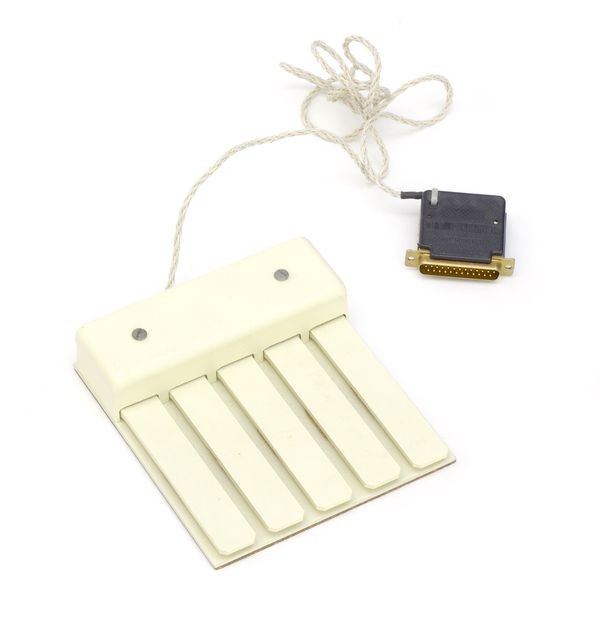
The 150 year old device that made a 50 year old Integrated Development Environment (IDE) rock Engelbart keyset: One handed chorded keyboard Photograph © Mark Richards courtesy of Computer History Museum I have been coding for more than 50 years. I am retired now, but still enjoy coding and learning. I have programmed for mainframes, 8-bit CPUs, home computers, servers, mobile devices, and modern development laptops. I have used more than 30 different programming languages professionally. Fifty years ago I was using one of the best, most fluid code editors I have ever used. This was the NLS (oNline System) in Doug Engelbart's Augmentation Research Center at Stanford Research Institute in Menlo Park, California in 1972. NLS was running on a 1 MHz PDP-10 with 1 MB of memory (real + virtual combined). How is it possible that a fifty year old software system was, in many ways, a faster, more efficient code editor than what I can find today? It was made possible by the visionary genius of Doug Engelbart and the high-performance user interface that he and his team built. One of the key innovations that enabled this performance was the use of a mouse and keyset together to control the user interface. Doug and William K. English invented the mouse and re-invented the keyset. SRI applied for patents on both the mouse and the keyset. They received a patent on the mouse and found out that the keyset was patented in the 1860s as a telegraph input device. The keyset is a five-key keyboard …
Originally sourced from Hacker News